
The Short Answer
A failing spring almost never snaps without warning. Before it breaks, it usually gets louder, slower, or visibly uneven — a gap opens in the torsion spring coils, an extension spring stretches past its original length, rust builds up along the coils, or the door suddenly feels heavier than it used to. If you notice any of that, the spring is on borrowed time, not broken yet, which is exactly when you want to deal with it.
Here's how to walk your own garage and check, item by item.
The Checklist
1. Look at the torsion spring (the one above the door, on a metal bar)
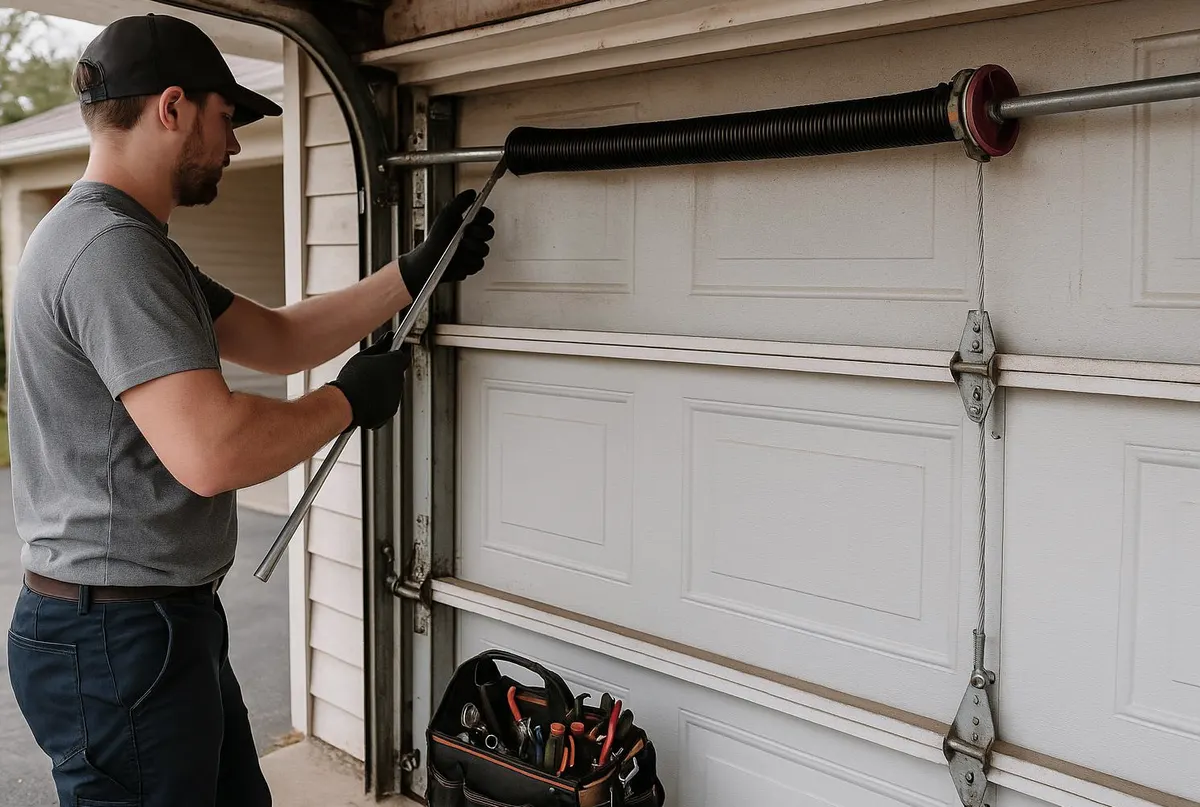
With the door closed, look for a visible gap between coils, or a section where the coil looks stretched thinner than the rest. A healthy torsion spring sits tightly wound with consistent spacing. If you see a gap or a kink, that's a stress point, and it's usually the spot where the spring will eventually separate.
2. Check for rust and flaking on the coils
Road salt tracked in on tires, combined with humid summers and freeze-thaw winters, corrodes exposed spring steel faster than most homeowners expect. Surface rust alone isn't an emergency, but pitted or flaking rust weakens the metal from the inside and makes a sudden break far more likely, especially once temperatures drop and the steel contracts.
3. Lift the door halfway by hand with the opener disconnected
Pull the release cord, then lift the door manually to about waist height. It should move smoothly and stay roughly in place when you let go. If it feels noticeably heavier than it used to, drops on its own, or fights you unevenly on one side, the spring is losing tension and compensating poorly.
4. Watch how the door sits and moves
Look at the door when it's fully closed — are the panels level, or does one side sit slightly higher? Watch it open and close a few times. A door that tilts, jerks, or opens unevenly often has one spring doing more work than the other, which is common once one spring has weakened and the opener is straining to compensate.
5. Listen for a loud bang, pop, or snapping sound
Sometimes a spring makes noise before it fully lets go — a single loud pop during operation, followed by the door suddenly feeling much heavier. If this happens, stop using the opener immediately and don't force the door up or down by hand.
6. Check extension springs for overstretching
If your door uses extension springs (the long springs stretching above the horizontal tracks, usually on older installations), compare their current stretched length to how far they extend when the door is closed versus fully open. A spring that looks permanently stretched, with coils separated even at rest, has lost its elasticity and is close to failing.
7. Inspect the cables running alongside the springs
Frayed, kinked, or rusted cables often fail around the same time as the spring they're paired with, especially on original doors from older homes where the whole system has aged together. A fraying cable under tension is a safety hazard on its own, separate from the spring issue.
8. Pay attention to how hard the opener is working
If the opener motor sounds strained, hesitates, or the door opens slower than it used to, the springs may no longer be carrying their share of the door's weight. This puts extra wear on the opener itself, not just the springs.
Why This Matters More Heading Into Winter
Cold weather tightens metal and makes already-stressed springs more brittle, and freeze-thaw cycles plus salt exposure accelerate corrosion on garage hardware all winter long. A spring that's showing early warning signs in October is far more likely to fail outright once the nor'easters and icy stretches start. Catching it now, while it's still an inspection and not an emergency, is the easier and cheaper path.
When to Call Hazleton Garage Door
If you spot a visible gap, heavy rust, uneven movement, or a loud pop, don't try to adjust or replace the spring yourself — these are under heavy tension and genuinely dangerous to work on without the right tools. Hazleton Garage Door handles Spring Repair & Replacement for both torsion and extension systems, matching the new spring's tension and gauge to your specific door rather than installing a generic replacement. We also offer Garage Door Maintenance visits that check spring condition, cables, pulleys, and hardware together, which is the easiest way to catch this kind of wear before it turns into a weekend without a working garage door.
If you're in Hazleton, West Hazleton, Drums, Freeland, or anywhere nearby and your springs are showing any of the signs above, call Hazleton Garage Door before winter sets in. We'll take a look, tell you honestly what shape your springs are in, and get it handled right the first time.