
The Mistake Most People Make First
The door won't budge, you're already running late, and the opener is right there on the wall. So you hit the button again. And again. Or you grab the manual release and yank hard, hoping brute force will pop the door loose from whatever is holding it. It's an understandable reaction — nobody wants to be stuck troubleshooting a garage door at 6 a.m. in freezing weather — but it's usually the worst thing you can do. If the bottom of the door is actually frozen to the slab, forcing it can strip the opener's drive gear, bend the track, snap a cable, or tear the bottom seal. If the problem is a weak spring instead of ice, forcing the door can snap it the rest of the way while you're standing under it. Before you push harder, it helps to know what's actually going on.
Symptoms to Watch For
- The door won't move at all, even though the opener motor is running (you'll hear it humming or clicking).
- Visible ice or a frost line where the bottom weatherstripping meets the concrete, especially after a day of melting snow followed by a hard freeze overnight.
- The door opens a few inches and reverses on its own, as if something is blocking it.
- Grinding, straining, or chain-slapping noises from the opener that weren't there in warmer months.
- General sluggishness — the door moves, but slower and less smoothly than usual, even on manual operation.
Each of these points to a different cause, and a technician will usually check them in a specific order, starting with the simplest and most common.
1. Ice Fusing the Bottom Seal to the Ground
This is the first thing checked because it's the most common culprit in this area. Hazleton's winter pattern — snow that partially melts in the afternoon sun, then refreezes overnight — creates a thin ice sheet right where the rubber astragal seal meets the slab or driveway apron. The seal essentially glues itself down. The fix is patience, not force: pour warm (not boiling) water along the seam, use a plastic scraper or an ice melt product safe for concrete, or run a hair dryer along the gap. Never chip at it with a metal tool, and never try to drive the opener through it — that's how bottom panels get bent or torn loose from the hinges.
2. Lubricant That's Thickened or Washed Away
Next, a technician checks the rollers, hinges, and track for lubrication. Grease and oil thicken in cold temperatures, and if the door was last lubricated before Hazleton's humid summer, whatever was applied may have already broken down or washed out. Thick or missing lubricant makes rollers drag in the track instead of rolling freely, which shows up as sluggish, uneven movement. The fix is straightforward: clean the track and hardware, then apply a silicone or lithium-based garage door lubricant (not WD-40, which is a solvent and evaporates quickly) to the rollers, hinges, springs, and the track itself.
3. Track Alignment Thrown Off by Frost Heave
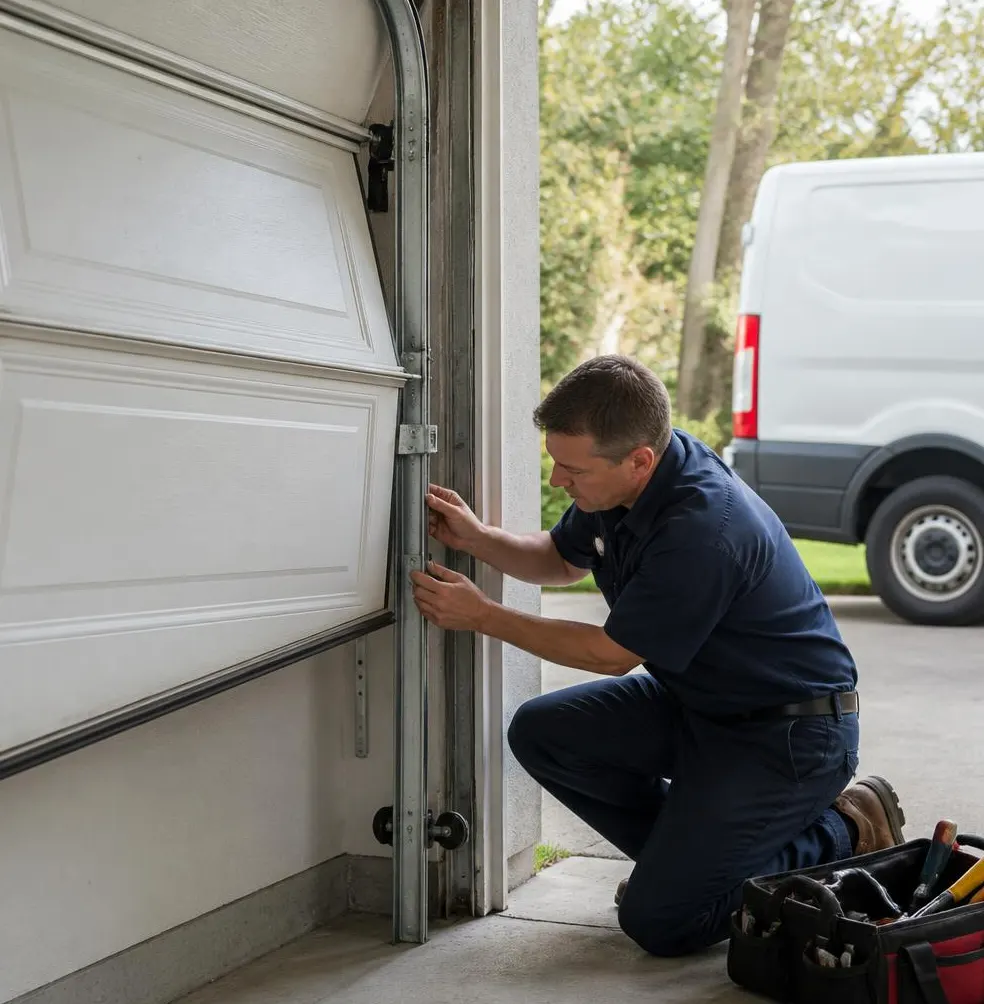
If the door still sticks after the seal is clear and everything's lubricated, the tracks get checked for alignment. Freeze-thaw cycles don't just affect pavement — they shift the ground under slabs and foundations too, and on older homes with original garage doors, the jambs the tracks are mounted to may have settled or twisted slightly over the years. Even a small misalignment makes rollers bind, especially in cold weather when metal contracts and tolerances tighten up. A technician checks the tracks with a level, looks for gaps between the track and rollers, and re-shims or re-bolts the brackets as needed.
4. Spring Tension and Balance
Cold weather doesn't weaken a spring's steel, but it does make metal more brittle and less forgiving of existing wear, which is why marginal springs often fail in winter rather than summer. If the door feels heavy when lifted manually, or the opener strains noticeably more than it did a few months ago, that's a balance problem, not a cold problem per se. Checking balance means disconnecting the opener and lifting the door by hand partway to see if it holds position. A door that's hard to lift, or that slams down, has a spring issue that needs adjustment or replacement — this is not a DIY repair given the tension involved.
5. Opener Force and Limit Settings
Last on the list, because it's the least common cause but still worth ruling out: opener settings that were fine in summer can cause the door to reverse or stall once added resistance from cold, stiff hardware comes into play. A technician can recalibrate the force and limit settings so the opener applies enough power to move the door through its full range without straining the motor or gears.
When to Call Hazleton Garage Door
If you've cleared visible ice, lubricated the moving parts, and the door still won't move smoothly — or if it's frozen solid and you need it operational the same day — that's when to call in. Our Garage Door Maintenance service covers exactly this: checking seals, track alignment, spring balance, and opener calibration before small issues turn into a stuck door on the coldest morning of the year. If the door is already stuck, misaligned, or making noises that worry you, our Emergency Garage Door Service gets a technician out to diagnose it on the spot rather than leaving you guessing.
Hazleton's winters are hard on garage doors, especially older ones that came with the house. If yours is sticking, groaning, or frozen shut, call Hazleton Garage Door and we'll get it moving again — and help make sure it doesn't happen again next freeze.